
Initially, I was very excited to read Yesteryear as it isn’t very often that mainstream books touch my neck of the woods. You know: my special interests. I downloaded the ebook the second it was published. (This is hyperbole.) Now I’ve finished it, I feel a little subdued. Stay with me on this … (for a very choppy, lukewarm take …)
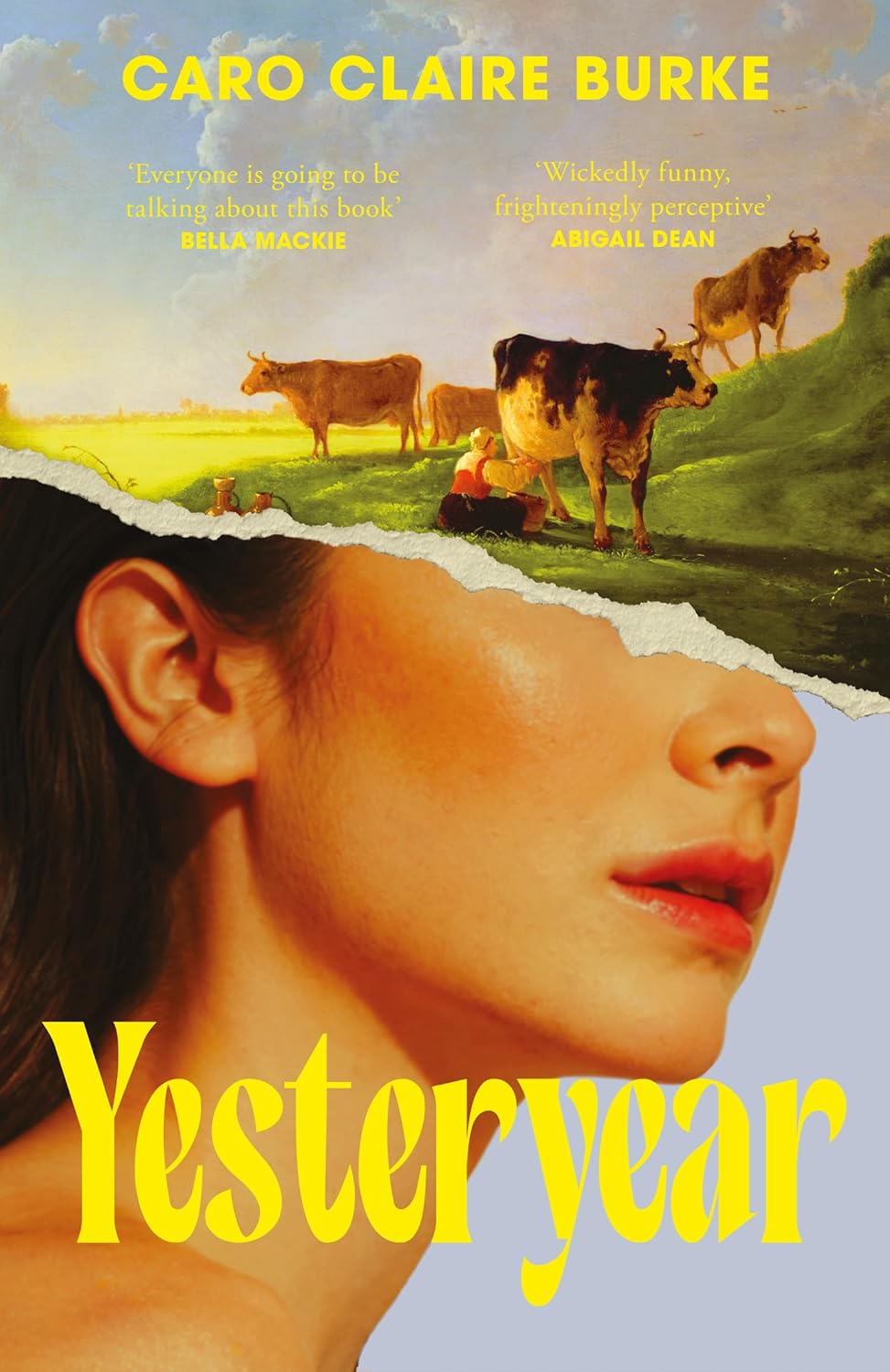
A traditional American woman, a beautiful wife and mother who sells her pioneer lifestyle of raw milk and farm-fresh eggs to her millions of social media followers, suddenly awakens cold, filthy, and terrified in the brutal reality of 1805—where she must unravel whether this living nightmare is an elaborate hoax, a twisted reality show, or something far more sinister in this sensational debut novel.
initial thoughts
It is important that we interrogate our society. Particularly the parts that could be having a harmful effect on us. The tradwife movement – where a woman must be the ‘keeper of the home’, where her ‘highest calling’ in life is to be a wife and mother – is harmful when that is the only choice a woman is given. If they have chosen it, I hate to break it to you, that’s feminism.
And it should be examined, but maybe with a little more care than Yesteryear gives it.
I don’t mind a protagonist who is unlikeable, in fact, I quite like them! We need more of them. But I do care when the protagonist isn’t fully fleshed out, and lives in quite a one-dimensional world.
This book lacks nuance. There. I said it. It hits the beats of what others think tradwives are – hollow, damaged by the same system that they perpetuate, living in a world of conspiracy theories, bigoted, hateful, hypocritical etc etc etc but it doesn’t properly examine them. It does not even properly touch on the why someone might have found themselves on that path.
is she even a christian lol
I don’t think Natalie, the protagonist, was as devout as Burke intended her to be. Sure, she was a Christian, there were some Bible mentions, some prayers etc but it rang hollow. What kind of Christian was she meant to be? There’s a billion different flavours! So many different traditions! At the very least, pick one!
In a way it reminds me of when an author tries to write a character in the middle ages, for example, who has some strangely modern ways of thinking. Burke didn’t immerse her character in the subculture that she would have been swimming in. We get some knowing nods to the audience, some moments that break the fourth wall and say see, she knows this is all a fraud as much as anyone else.
But, dear Reader, I’m not certain that’s true to a character who would have been submerged in fundamentalist Christianity from a young age. It feels false.
this reminds me of christian fiction
I don’t like Christian fiction because I find that the veil that separates the sermon from the story is threadbare, and it becomes a didactic mess; Yesteryear has the same issue.
To put it in a slightly different way: everyone was mad at God’s Not Dead because how laughably that film portrayed an atheist, and I feel as though this is the other side to the same coin, and honestly? Both sides should do better.
I don’t know much about Burke but I think had she spent time in fundamentalist Christianity she would have portrayed Natalie differently, if she’d tried to walk a mile in her shoes for example, to crawl beneath her skin and understand what makes someone like that tick. And I don’t think she did.
This felt like an easy way to point and say yes, aren’t they all hateful?
Satire is all very well, but please, do it better! This was too easy. The lowest form of wit, if you will. It was perhaps dehumanising, a caricature. (I am bruised from the satire in Gulliver’s Travels; it occurs to me if these two are prime examples of what satire has to offer, I’m not sure it is the genre for me.)
the ending is too neatly tied
I like tying up loose ends as much as the next person, but this was too much. I shan’t spoil what happens but it was too beautifully tied and felt both over and underexplained. (No, that doesn’t make sense but it does if you’ve read the book. Probably.)
in summation …
I don’t know who this book was targeted at, if it was to the tradwife movement (I am positive it isn’t) it will be alienating. If it was to the movement’s detractors, it will solidify all that they think and more.
It will not build bridges. But perhaps it wasn’t meant to. But that’s the frustrating thing for me – good fiction has power, it can make you really think. This book is making waves, but I fear that they are cheap ones.
High control religion is incredibly damaging to anyone and everything it touches. We need fiction and non-fiction that examines its nuance. I suppose I was expecting more from this book than it was able to deliver.


Great review! I didn’t even get in to the religious aspect in my own review but you nailed it. Overall, this book doesn’t read to me like Burke has spent much time within Christianity, let alone the more fundamentalist parts of it. I didn’t read Natalie as a believer, which was confusing because I couldn’t tell if that was supposed to be another thing she was faking.
Yes! It’s so bizarre – I feel that religion is an enormous part of tradwife-ry, and I think it’s an entire side to the book that is neglected – to its cost.
Agreed!
“This book is making waves, but I fear that they are cheap ones.” 🔥🔥🔥
(Enjoying chatting with you on this one!!)
*enjoyed. 🤦♀️
Haha thank you for listening to the ramble!!