
It was a week, let me tell you. And it culminated in me looking down into my handbag to find that a big snack box of honeyed peanuts and yogurt-coated cranberries had spilled. There they were, like I was some illicit elephant in a trenchcoat carrying around my snackage with me.
It says a lot about the extremities of my state of mind, that instead of panicking and calling the emergency services, I laughed, told everyone I met, and snacked in a sort of resigned ‘well, when life gives you lemons’ kind of way.
(Honeyed peanuts. The sugar dust. It was so gross and I had a hairbrush in there and everything needed to be cleaned.)
But you know who wouldn’t spill peanuts into their bag? Michael Collins. ’cause he’s competent as heck and went to the moon. So. Just so you know.

Listen, let me tell you, I love some competency in my books. Fiction, non-fiction – I don’t care. I want to hear about someone trying really hard and through trial and error succeeding brilliantly, astoundingly well.
Space, the stars, the planets and anything written about them have a magnetic pull on me. A gravitational pull, if you will. This is the second book by an astronaut I’ve read, this one has much more of a feeling of being a part of a movement. (If the ‘movement’ was NASA and the movement’s purpose was putting man on the moon.)
Mike Collins is humble and he worked really hard and he went to the moon. That’s the short of it. I guess he would add that he was also exceptionally lucky, to be in the right place at the right time.

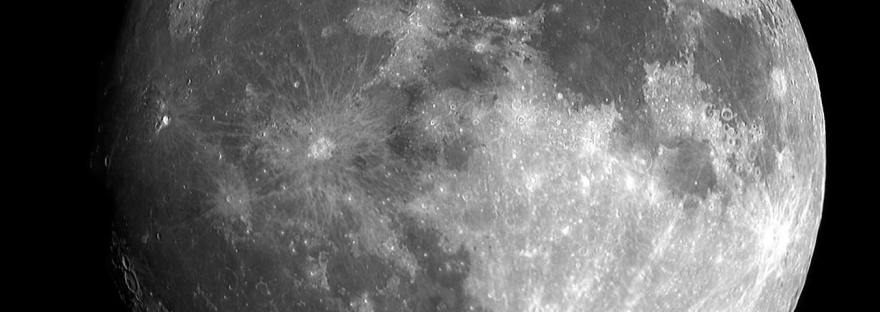
The book follows his career and the Gemini mission and, naturally, culminating in the Apollo mission to the moon. Collins was the one who didn’t walk on the lunar surface. He was the one high above Neil and Buzz in the Columbia, waiting for them to come back up.
Far from feeling lonely or abandoned, I feel very much a part of what’s taking place on the lunar surface. I know that I would be a liar or a fool if I said that I have the best of the three Apollo 11 seats, but I can say with truth and equanimity that I am perfectly satisfied with the one I have. This venture has been structured for three men, and I consider my third to be as necessary as either of the other two.
In describing NASA’s journey to the moon, Collins includes many technical details yet he writes in a practical, immensely accessible way, his personality quietly shining throughout. He is careful to always give credit where credit is due – even down to the ladies who glued the EVA suits together. (A vital task, lemme tell you.)
When reading, you get the immense feeling of just how much work went into putting Apollo 11 on the moon. How many things had to be exactly right for it to work. How much passion was in it. This wasn’t a 9-5 job – this was all-consuming.

Collins may have been a very practical man, and there are one or two sections that are very of their time, but his appreciation of the pricelessness of this planet we all share is beautifully expressed.
I really didn’t appreciate the first planet until I saw the second one. The moon is so scarred, so desolate, so monotonous, that I cannot recall its tortured surface without thinking of the infinite variety the delightful planet earth offers.
Our earth is precious, it is fragile, we have to protect it. (Because if we protect it, you know, we’re protecting ourselves. Because we are all connected. Sorry. End of soapbox.)
I was touched by the poem Pat, Collin’s wife, wrote to him, just before the Apollo 11 mission, which ended in:
Take my silence, though intended;
Fill it with the joy you feel.
Take my courage, now pretended-
You, my love, will make it real
If you are interested in space, exploration, or just extreme competency, I’d really recommend diving into Carrying The Fire: An Astronaut’s Journeys – and not, incidentally, spilling copious amounts of peanuts and cranberries in your bag. (My wisdom is free. You’re welcome.)
 of words & books